
How Close Is War? Scenario Mapping the USA-Iran Confrontation

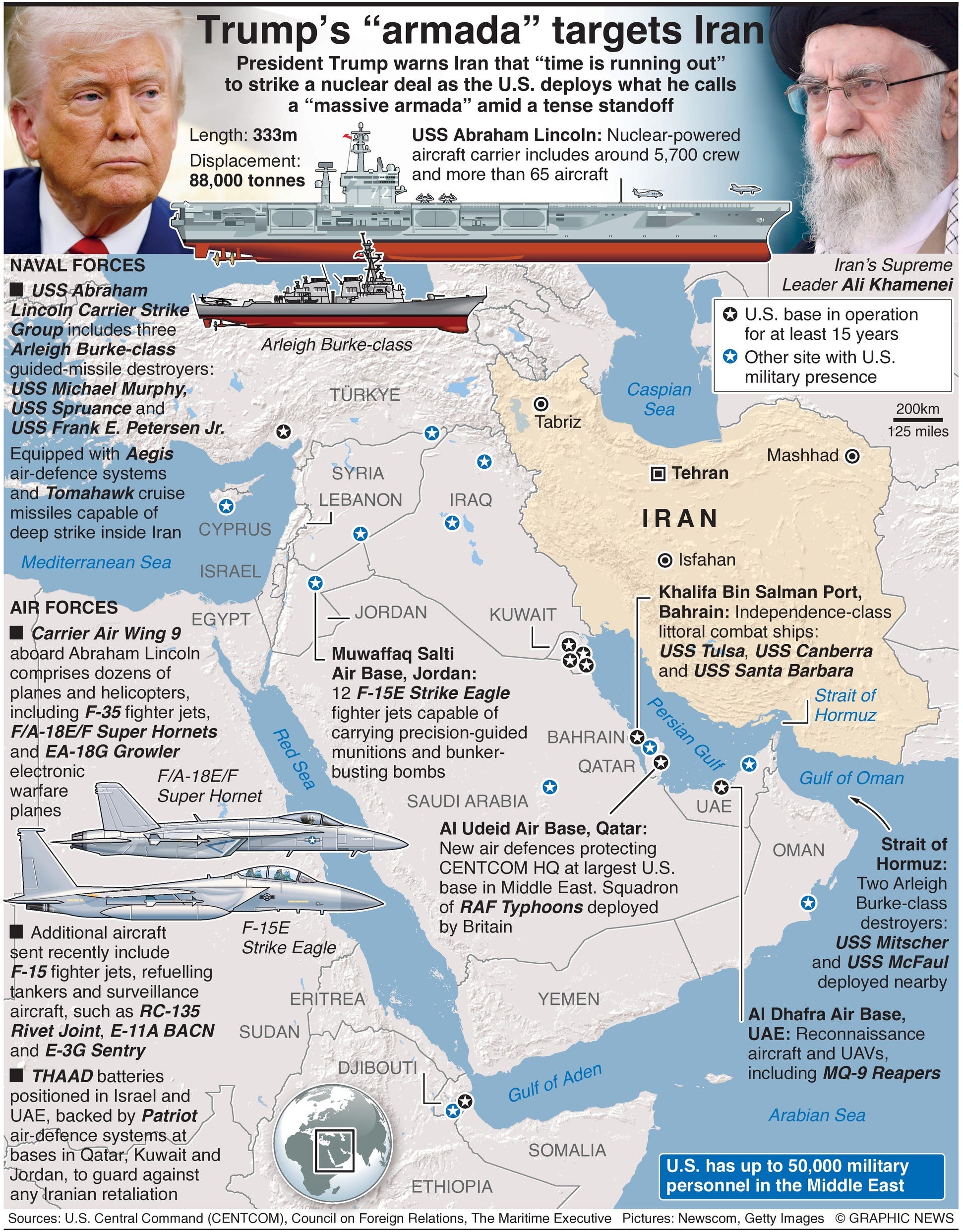
President Trump has warned Iran that “time is running out” to secure a nuclear deal, as the United States moves a self-described “massive armada” into the region and sharpens its rhetoric.
Trump administration’s messaging has been deliberately cryptic. Washington points to the risk of Tehran restarting its nuclear capabilities. Tehran has warned that any strike would trigger retaliation against targets in Tel Aviv. For now, the confrontation remains one of calibrated brinkmanship.
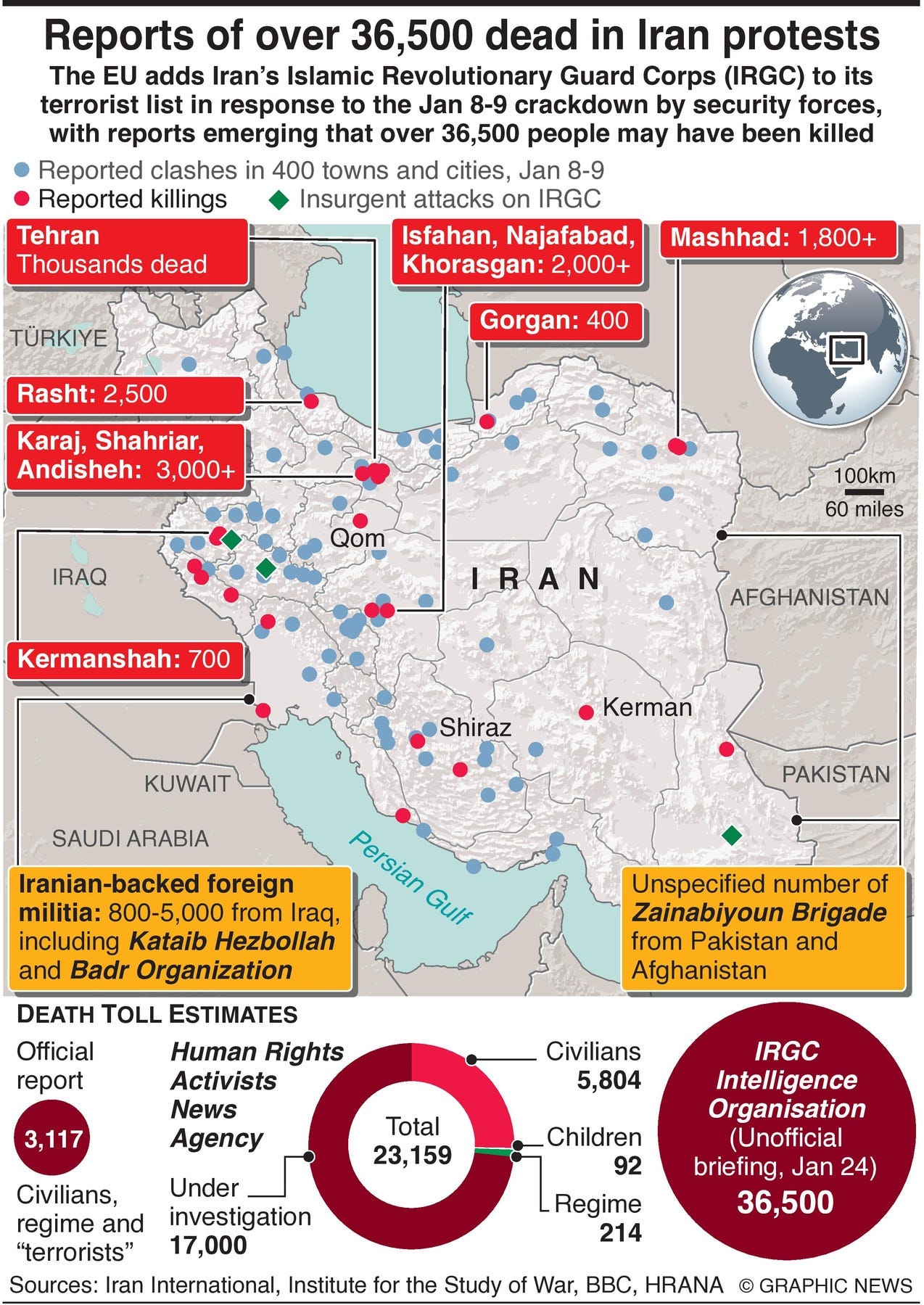
Emboldened by the Venezuela operation and appearing increasingly disgruntled since the turn of the year, Trump has adopted a more confrontational approach toward both adversaries and allies. At the same time, Iran’s internal instability has altered Washington’s risk calculus and encouraging a belief that pressure applied now may yield greater leverage.
Israel looms over every phase of this standoff. Iranian threats to retaliate against Tel Aviv are intended not only to deter U.S. action, but also to complicate Washington’s calculations by raising the prospect of a wider regional conflict—one in which escalation dynamics would be far harder to contain.
Against this backdrop, the current trajectory can be mapped across four broad scenarios—ranging from coercive diplomacy holding, to a regional escalation that few appear to want but should not be completely discounted.
So how will this play out and what are the commercial implications?
Scenario Mapping...
