
When Polarisation Turns Lethal: A Dark New Chapter in U.S. Politics

The assassination of U.S. conservative activist Charlie Kirk at Utah Valley University marks a watershed moment in America’s already fraught political climate. Kirk, 31, a vocal supporter of former President Donald Trump and founder of the conservative youth organization Turning Point USA, was fatally shot on 10 September while addressing an audience of some 3,000 people.
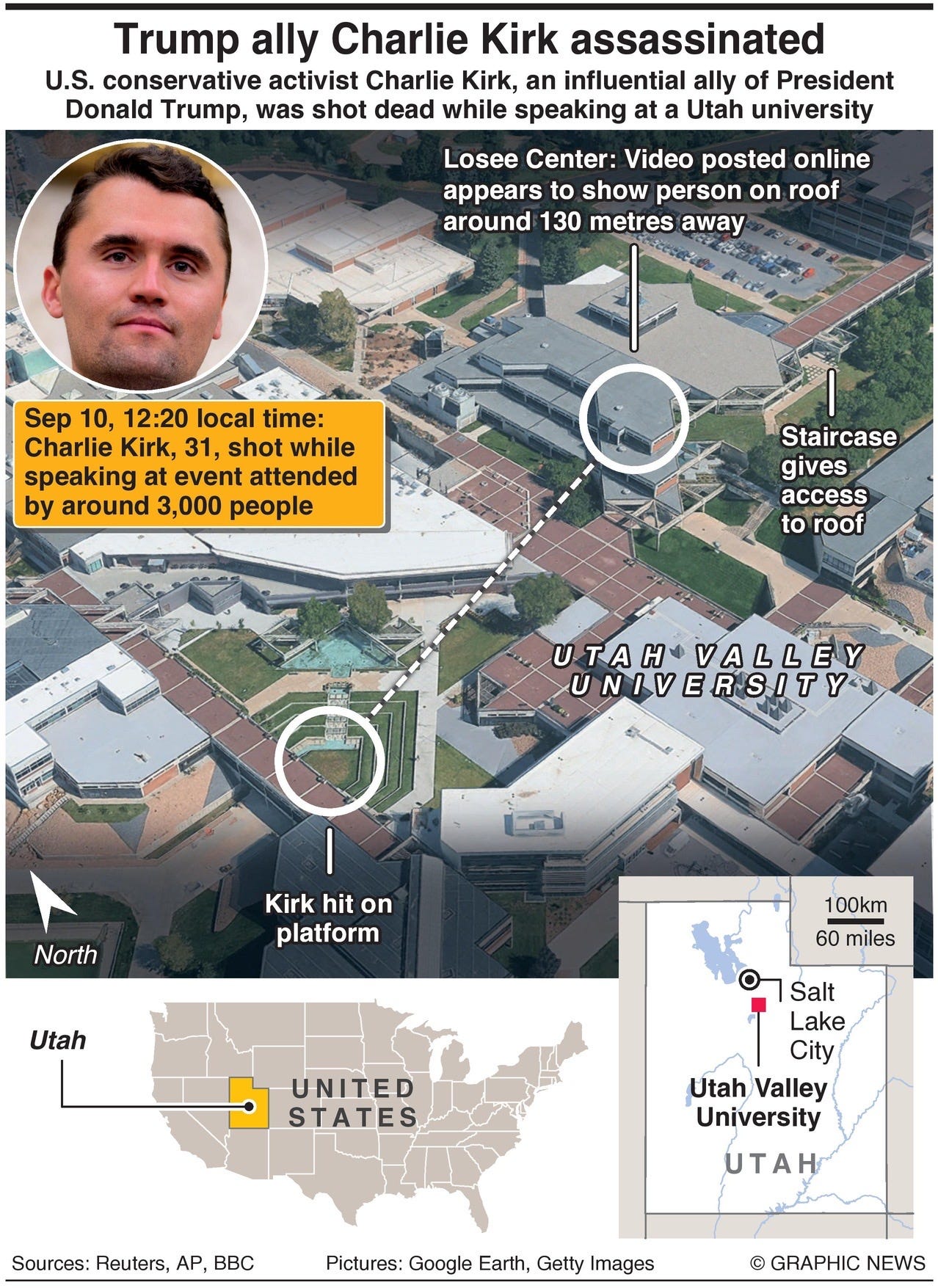
According to reports, the attack was carried out from a rooftop position approximately 130 metres away, with footage suggesting the shooter accessed the vantage point via an open staircase. The strike was precise, hitting Kirk as he spoke to the crowd.
The optics of the incident are striking. This was not an opportunistic attack but one involving planning, surveillance, and an intent to deliver maximum impact—both symbolically and politically. Kirk was shot as he fielded a question on mass shootings, a grim irony that sharpened the symbolism. His role as a vital component of Trump’s re-election effort—particularly his ability to mobilise the Republican youth vote—only amplifies the political significance of the killing.
At this stage, authorities have not established a definitive motive. Early but unconfirmed reports state that the rifle and cartridges recovered included engravings referencing “transgender and antifascist ideology.” However, investigators caution that initial interpretations may mislead. What is known from past precedents is that perpetrators of political or high-profile assassinations are often lone actors—socially isolated, sometimes mentally unstable—who view striking a public figure as a way to amplify grievance, ideology, or notoriety. Symbolic statements, such as manifestos or engravings, are common, but motives are rarely clear-cut.
